


A Book Of Mediterranean Food
Publisher: MacDonald
Format: Hardback
ISBN: none
Some cookery books teach recipes. A Book of Mediterranean Food did something far more subversive: it turned up in postwar Britain, looked bleakly at the national menu, and suggested that food might reasonably contain olive oil, garlic, herbs, tomatoes, colour, sunlight and pleasure. Elizabeth David’s now legendary book remains one of the great acts of culinary liberation in English publishing, a volume that did not merely describe Mediterranean cooking but helped persuade a damp island that life could, with effort, taste better.
Published here in 1958 by MacDonald, this is a pleasingly early survivor from the era when David’s influence was already spreading through British kitchens, bookshops and imaginations. The book first appeared in 1950, and by the time of this edition it had already become something more than a cookbook. It was a dispatch from another world: one in which food was not assembled apologetically from boiled components but brought together with confidence, sensuality and the alarming implication that lunch might actually be worth looking forward to.
What made Elizabeth David so transformative was not simply that she offered recipes from France, Italy, Greece and beyond. It was the way she wrote. She did not sound like a laboratory technician of the saucepan. She wrote with appetite, elegance and cultural intelligence, as though food were part of civilisation itself rather than a grim logistical necessity to be endured between tea and rationing. Her pages are full not only of ingredients and methods, but of atmosphere, travel, memory, place and the deeply civilised suggestion that cooking well might be inseparable from living well.
There is something wonderfully ironic about the impact of this book. By modern standards, Mediterranean food hardly sounds revolutionary. Olive oil now stares at us from every supermarket shelf with complete confidence in its social position. Garlic no longer needs to travel under cover of darkness. Aubergines have ceased to be suspicious. Yet in the Britain into which David first published, these things carried the charge of cultural contraband. A Book of Mediterranean Food was not merely a cookbook; it was a mild but decisive insurrection against culinary dreariness.
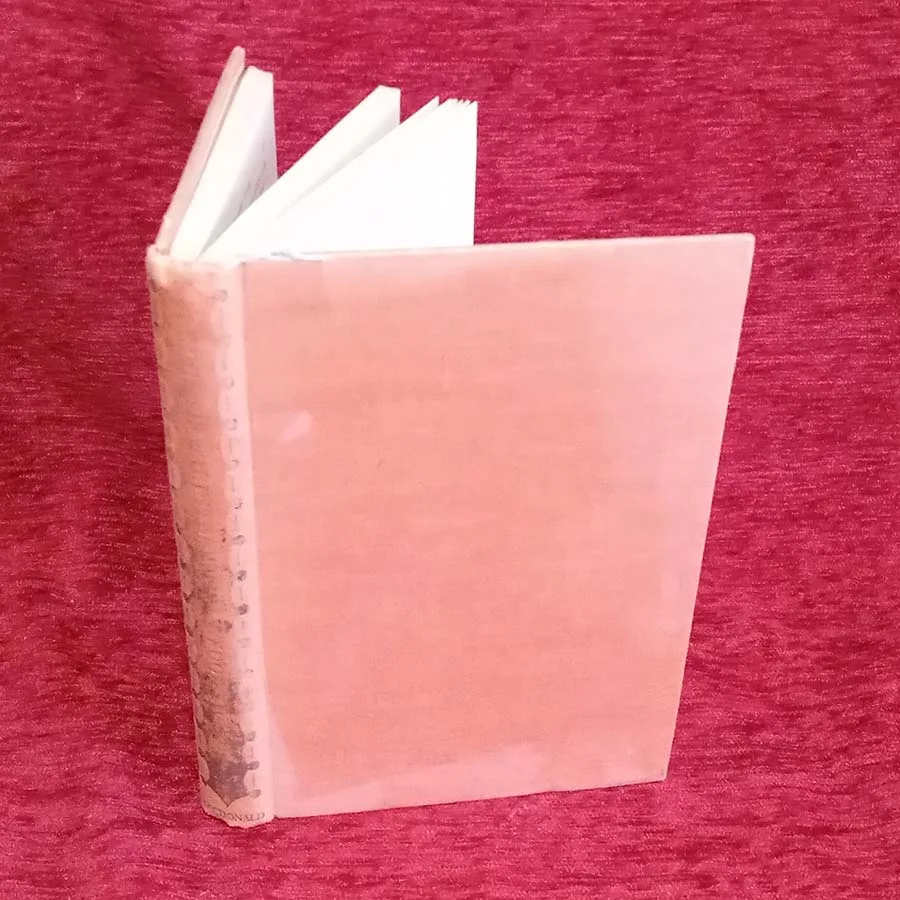
This 1958 MacDonald edition has its own quiet charm as an object. It comes from a time when serious food writing still expected to be read, kept, consulted and lived with, rather than splashed across glossy pages as decorative aspiration. The book looks restrained, modest and practical, but inside it contains an entire shift in sensibility. That contrast is part of the pleasure: a neat little volume with the revolutionary message that dinner need not be miserable.
In Good condition, this copy has aged attractively, with the spine details faded, exactly the sort of honest wear that suits a book meant to live in kitchens and near cookery shelves rather than in untouched collector’s twilight. A faded spine on Elizabeth David feels almost appropriate. These books were used, reached for, inherited, argued with, and stained into memory. They were not simply admired as symbols of taste; they helped create it. One likes to imagine this copy once sitting near a stove while someone nervously attempted garlic and olive oil for perhaps the first or twentieth time.
And that is part of David’s enduring charm. She is not merely instructive; she is persuasive. She makes one want to cook, want to eat, want to understand where ingredients come from and why they belong together. Even readers who never intend to prepare a single recipe can enjoy her for the prose alone. She writes like someone who has seen the world and cannot quite believe others are still willingly eating badly. Quite right too.
For the modern reader, A Book of Mediterranean Food remains fascinating on several levels at once. It is a practical cookery book, certainly, but also a cultural landmark and a small history of changing British taste. It belongs to that rare class of books that genuinely altered domestic life. Countless later cookbooks owe something to David’s tone, her eye, her seriousness and her conviction that flavour matters. The book is therefore not only useful and enjoyable, but quietly historic.
As a Crappy Old Books item, it is exactly the right sort of thing: elegant, influential, evocative and full of civilising intent. It will appeal to cooks, collectors of classic food writing, admirers of Elizabeth David, and anyone who enjoys old books that changed everyday life without ever raising their voice. A cookbook that helped modern Britain discover the Mediterranean is no small achievement.
In short, this 1958 MacDonald edition of A Book of Mediterranean Food is a lovely, characterful copy of one of the most important cookery books of the twentieth century. In Good condition, with faded spine details, it remains a deeply attractive Crappy Old Books survivor: modest in appearance, transformative in spirit, and still carrying the warm, garlic-scented shock of a culinary world made suddenly larger.
Keep browsing: See more Food books Other books by Elizabeth David
